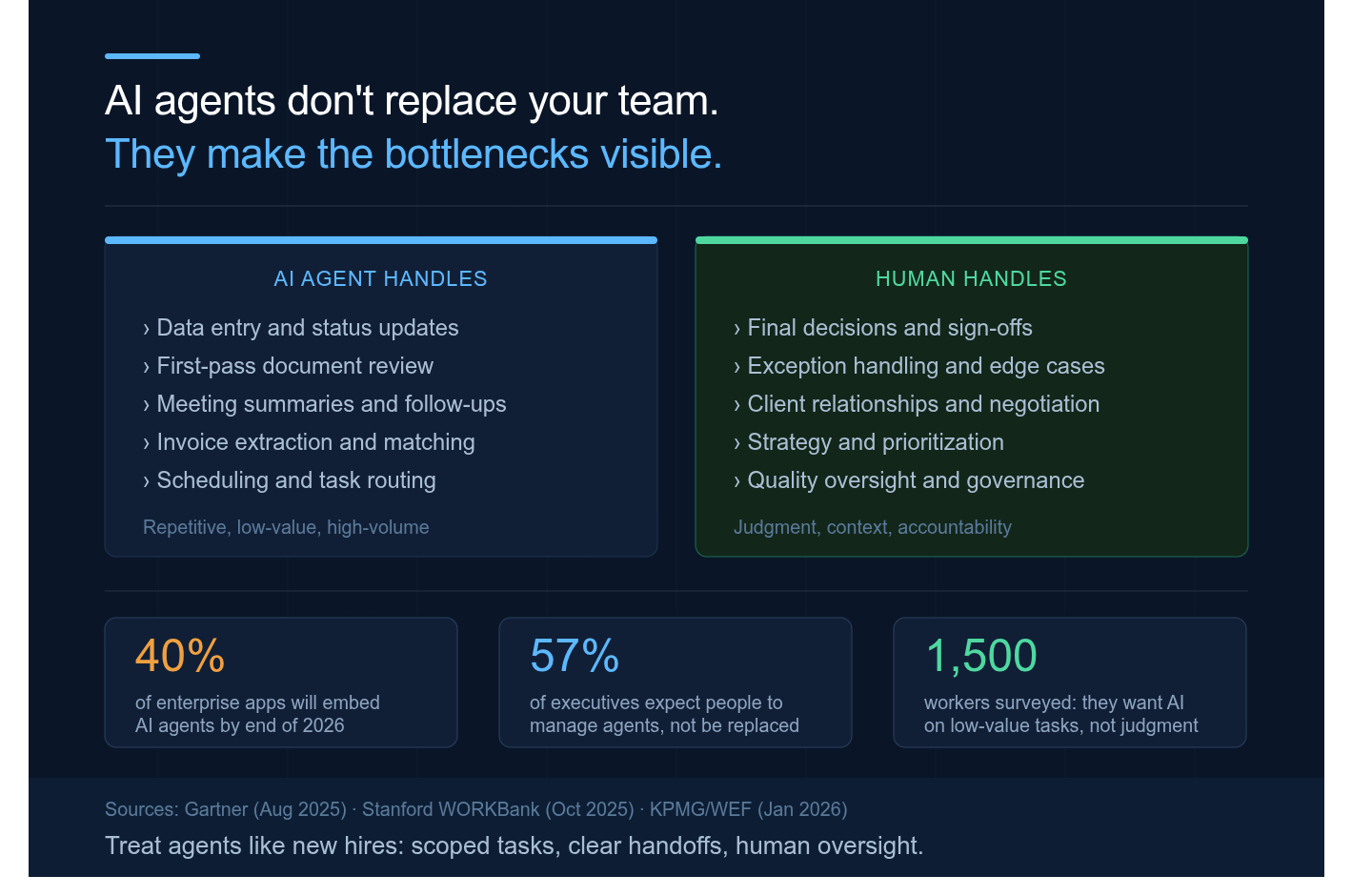
Gartner’s latest forecast landed hard: 40% of enterprise apps will run task-specific AI agents by the end of 2026. That’s an 8x jump from today’s adoption rates. But here’s what nobody’s talking about in the hype cycle: the companies moving fastest aren’t firing people. They’re killing the busywork.
Think about your week. How much of it actually goes to thinking, creating, deciding? And how much vanishes into data entry, status checks, forwarding emails to the right person, or reviewing drafts that should’ve been caught upstream? For most teams, it’s closer to 60-40 than anyone wants to admit.
When you plug an AI agent into that gap, something weird happens. Suddenly your team can see the real bottleneck. It’s not the person. It’s the process that was eating their time. Maybe you don’t need someone doing data entry every morning. Maybe you need better handoffs between departments. Maybe that approval step exists only because nobody trusts the stage before it.
The smart plays we’re seeing right now follow a pattern: deploy agents to handle the repetitive parts, watch your team’s actual constraints emerge, then fix the systems that created those constraints in the first place. It’s not “replace the middle manager.” It’s “why are middle managers spending 10 hours a week chasing status updates that could be automated?”
AI agents are less about cutting headcount and more about finally seeing what your organization actually does versus what it thinks it does. Once you see it clearly, you can build something better.