Your operators are drowning in routine tasks. Log entries, status checks, alarm triage, shift summaries. It’s necessary work, but it’s not why you hired them. They should be making decisions, spotting anomalies, and keeping systems safe. The rest? Hand it to AI.
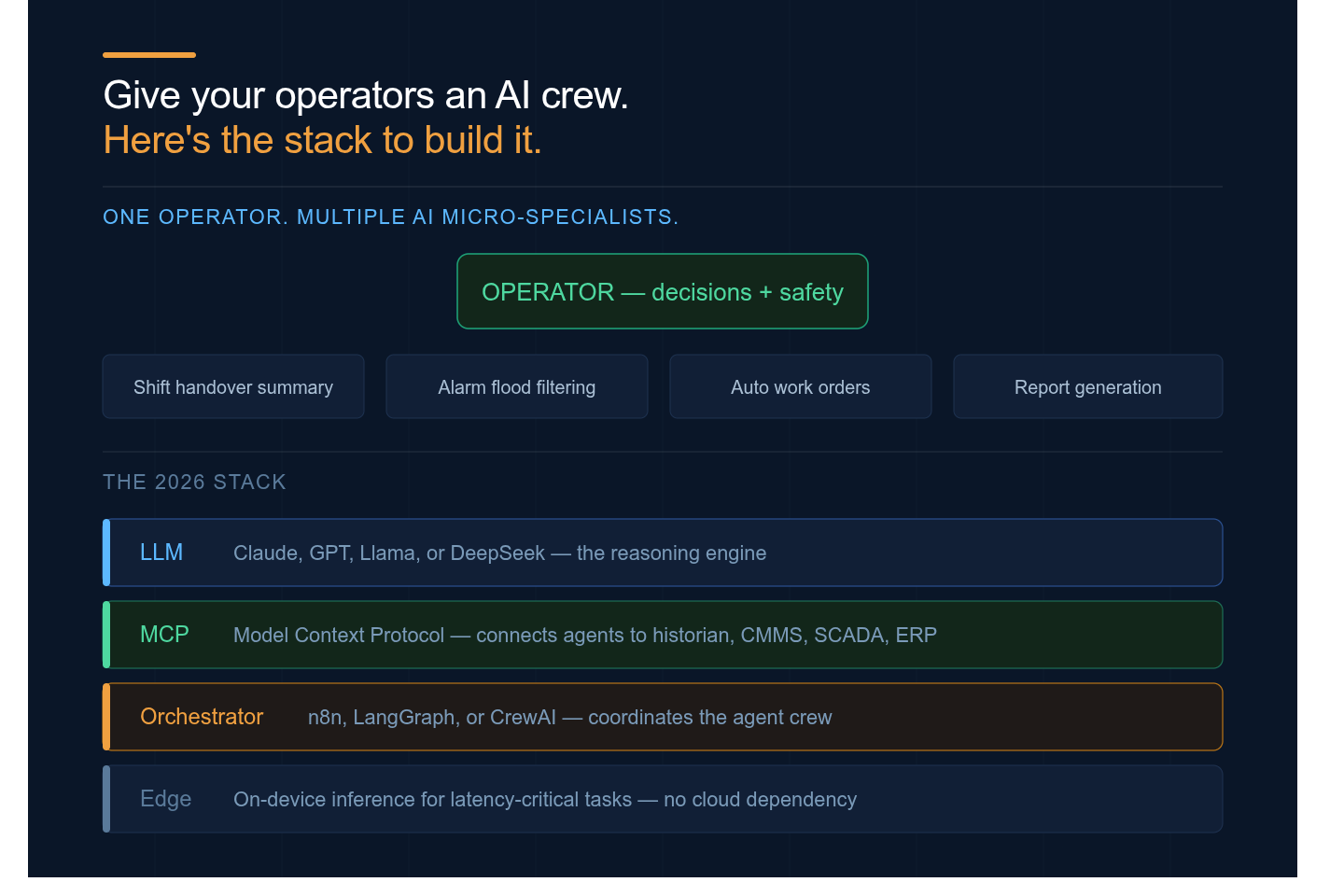
The trick isn’t one super-agent that tries to do everything. That’s fragile and hard to trust. Instead, build a crew of micro-specialists. Each AI agent owns one specific task and does it well. One handles log entries. Another triages alarms. A third generates shift handover summaries. They work in parallel, stay focused, and fail gracefully if something goes wrong.
Here’s the stack that works: Start with a task orchestrator (something like Apache Airflow or a lightweight task scheduler) that routes work to the right agent. Use LLMs with narrow prompts and structured outputs for each specialist. Add a simple verification layer where operators confirm or override AI decisions on anything critical. Connect it all through your existing systems via APIs. Build observability in from day one so you can see what each agent is doing and catch problems early.
The payoff is real. Your operators get back hours every week. You reduce entry errors because AI doesn’t get tired. And critically, you maintain human oversight over the decisions that matter most. The operators stay in control. They just stop wasting their brains on repetitive work.
Start small. Pick your most painful routine task. Build one specialist agent. Run it alongside your current process for a week. Then add the next one. This approach scales without the risk of a single point of failure.