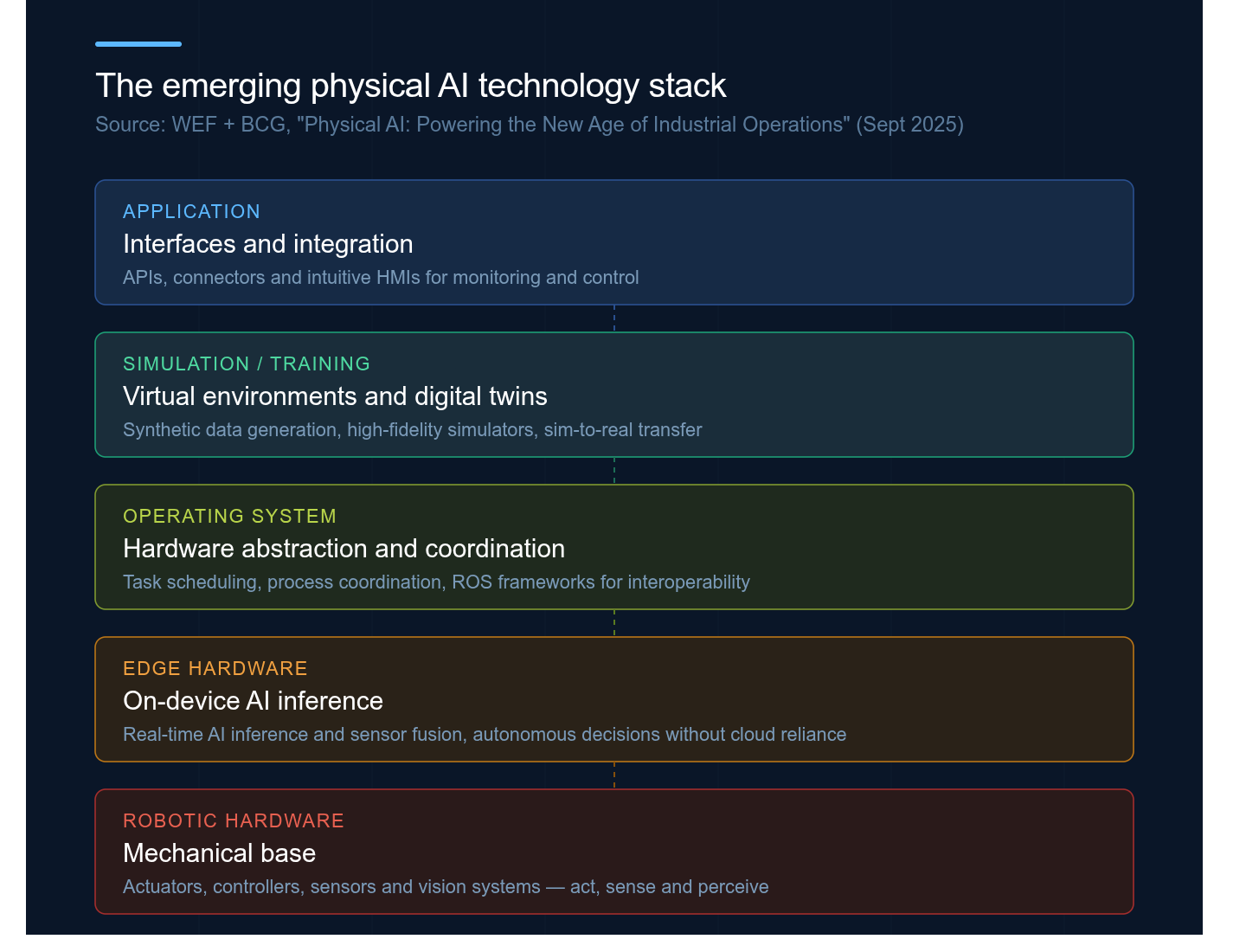
Here’s what separates the winners from the pretenders in physical AI: the winners aren’t using AI to make their existing systems smarter. They’re rebuilding their operating systems from the ground up around what AI can actually do.
Most companies treat physical AI like a software upgrade. Drop in better algorithms, tweak the parameters, call it innovation. That’s backward. The real competitive advantage comes from redesigning how work actually flows through your operation. When you account for AI’s capabilities from day one, you can eliminate bottlenecks that your old system treated as inevitable.
Think about it differently. A traditional factory is built around human limitations and mechanical constraints. But AI systems don’t get tired, don’t need visual clarity the same way humans do, and can process information at machine speed. If you’re still organizing your operations around those old constraints, you’re leaving massive efficiency gains on the table.
The companies we’re seeing crush it aren’t just getting smarter robots or better predictive algorithms. They’re rethinking material flow, redesigning handoff points, eliminating redundant checkpoints, and restructuring how humans and machines collaborate. That’s operational architecture, not AI implementation.
The message is clear: if you’re planning to integrate physical AI, don’t ask how to retrofit it into what you have. Ask how you’d rebuild everything if you could start fresh knowing what AI could handle. Then actually do that redesign. That’s where the real returns live.