For years, the narrative around AI was simple: these systems are power-hungry monsters. Fair point, given the energy demands of training large language models. But the story just flipped, and the data backing it up is hard to ignore.
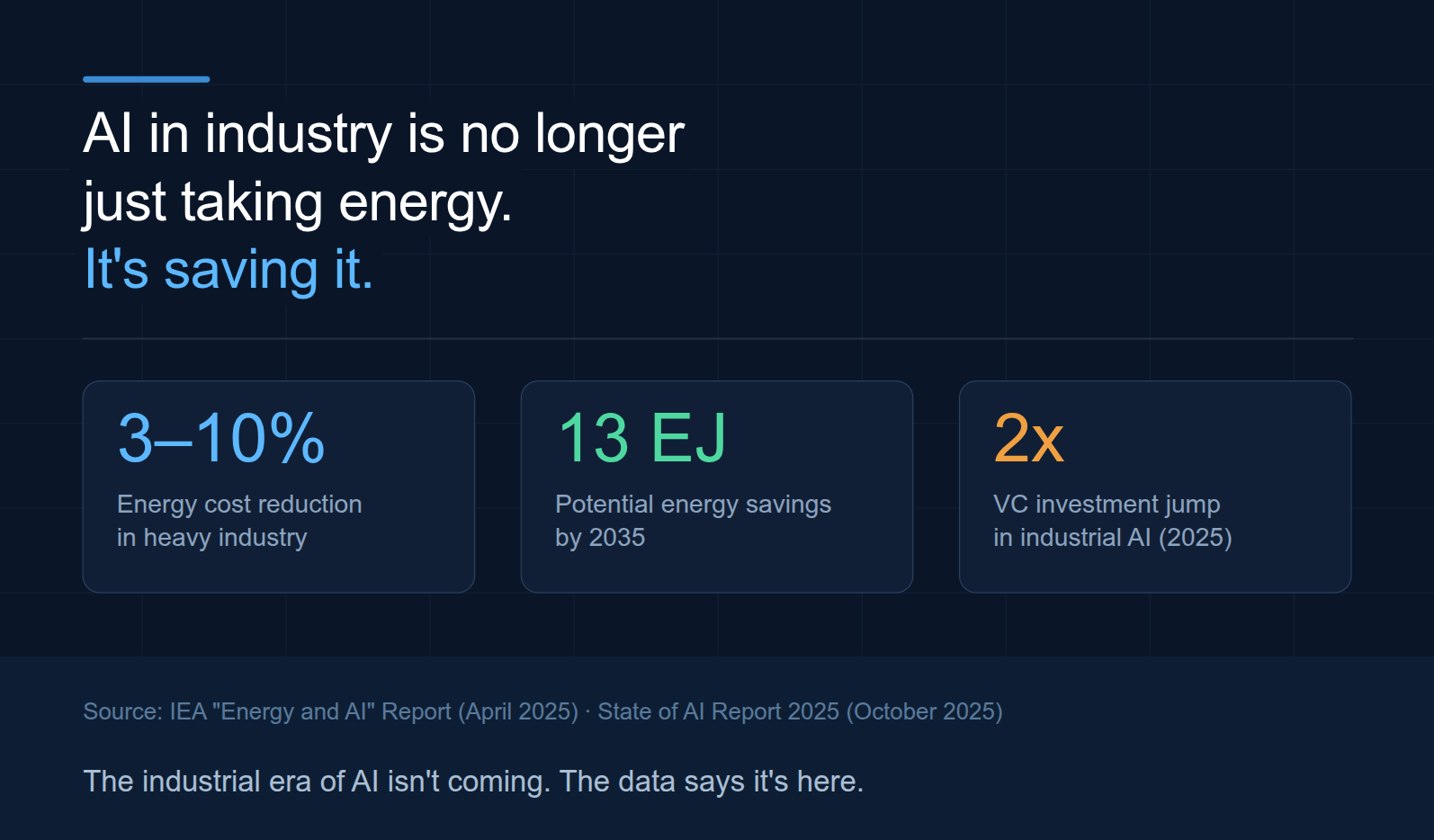
The International Energy Agency dropped some serious numbers recently. Proven AI applications in energy-intensive industries can slice energy costs by 3 to 10 percentage points. That’s not marginal savings. And by 2035, documented use cases could conserve over 13 exajoules of energy globally—roughly 3% of total final energy consumption. To put that in perspective, that’s the annual energy footprint of entire countries.
What’s really signaling a shift from hype to reality is the money moving into this space. Venture capital investment in industrial and energy AI nearly doubled in 2025. The State of AI 2025 report calls it explicitly: we’re entering the industrial era of AI. We’re not talking prototypes anymore. Multi-gigawatt data centers and sovereign-backed compute infrastructure are being built to scale. This is structural, not experimental.
The transition makes sense when you think about it. AI is being deployed to optimize everything from manufacturing processes to grid management to materials discovery. The efficiency gains compound. An AI system that helps a factory cut waste, or a power plant run smarter, or a chemical process use less energy pays for its own carbon footprint many times over.
This is one of those rare moments where the business case and the climate case align perfectly. AI isn’t just becoming cheaper to run. It’s becoming the infrastructure that makes the entire economy cheaper to run.