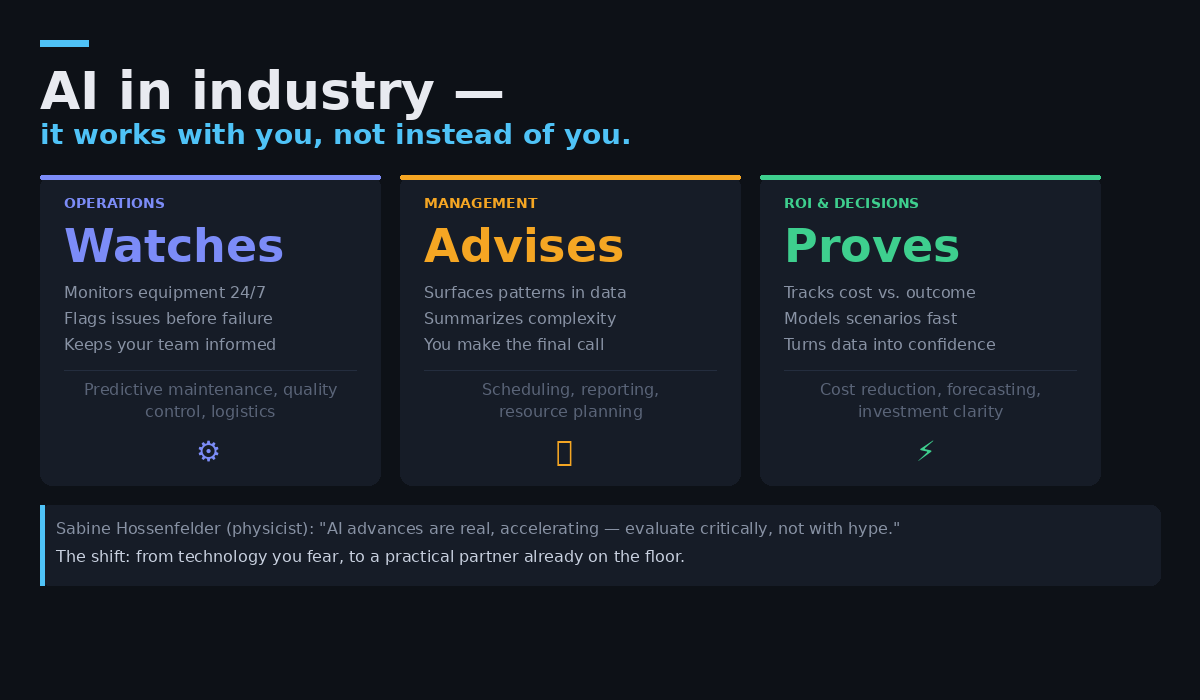
Let’s be honest: AI advances in the past 18 months have been genuinely impressive. We’re past the stage of clever chatbots. These systems are now tackling problems that once required years of PhD-level research. Protein folding, drug discovery, materials science, theoretical physics. The breakthroughs are real and they’re accelerating.
But here’s where things get messy. The same advances that are producing legitimate scientific progress are also generating a tsunami of hype. Every company wants to slap “AI-powered” on their product. Every investor sees a trillion-dollar opportunity. And somewhere in that noise, it becomes harder to separate what’s genuinely transformative from what’s just marketing.
The trick is learning to evaluate these claims critically. Ask the right questions. What specifically is the AI system doing? Can you reproduce the results? Who benchmarked it, and were they incentivized to oversell? Is this solving a real problem, or creating the illusion of one?
The exciting part is that the real breakthroughs don’t need hype. They speak for themselves. A model that predicts protein structures with unprecedented accuracy doesn’t need flashy marketing. Neither does AI that genuinely accelerates drug development or helps scientists design new materials. The impact is measurable and immediate.
So stay curious, but stay skeptical. The AI revolution is happening. Just don’t mistake the noise for the signal.