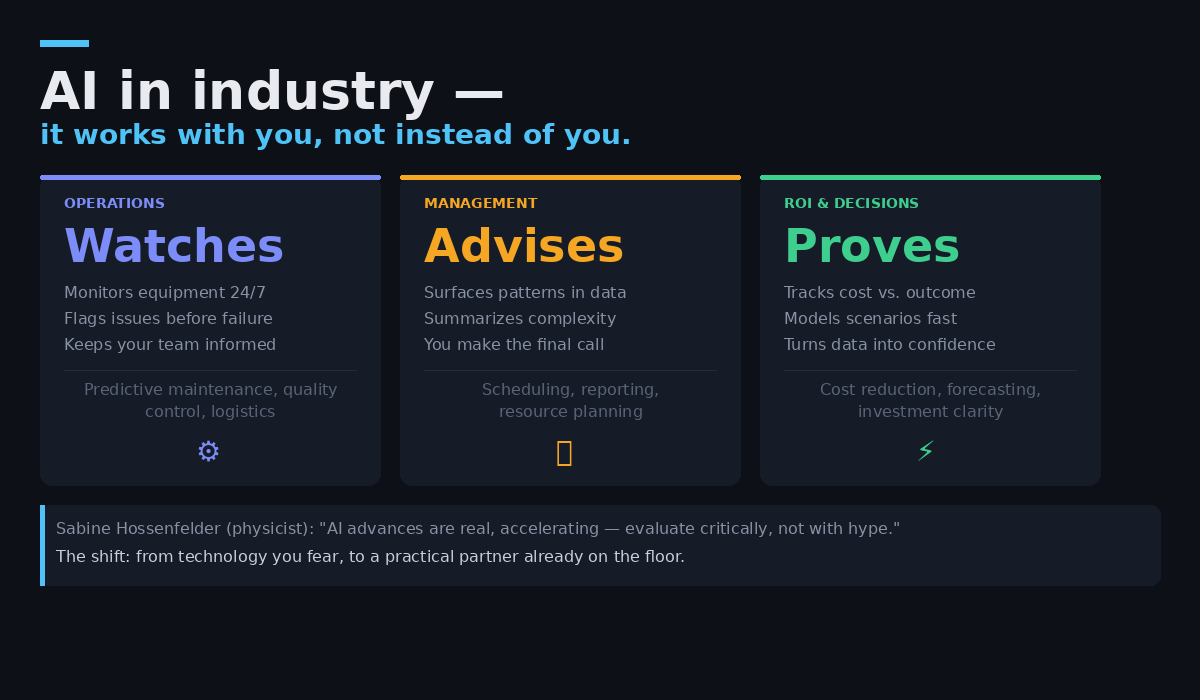
The AI hype cycle is deafening, but here’s what’s actually happening: AI systems are tackling problems that used to require PhDs and years of specialized research. We’re seeing real breakthroughs in protein folding, drug discovery, materials science, and complex optimization. These aren’t minor improvements. They’re reshaping how entire fields operate.
But let’s be honest about what that means. Yes, AI is accelerating. Yes, the capabilities are genuinely impressive. And yes, we should take that seriously. The problem is that serious evaluation gets drowned out by either breathless optimism or reflexive skepticism. Neither is useful.
The operational reality is messier than the headlines suggest. AI excels at pattern matching across massive datasets and narrow, well-defined problems. It’s genuinely transformative for those use cases. But it still struggles with edge cases, requires careful validation, and works best when integrated thoughtfully into existing workflows rather than treated as a replacement for domain expertise.
For anyone evaluating AI implementations, the question isn’t whether the technology is revolutionary. It is. The question is whether it solves your specific problem, at what cost, with what dependencies, and what happens when it fails. Those are unsexy questions. They’re also the ones that matter.
The next wave of competitive advantage won’t go to companies that adopt AI fastest. It’ll go to those that evaluate it most rigorously and implement it most strategically. That’s not a constraint. That’s an opportunity.